
Connected operations for heavy equipment
One workspace for heavy-
SERA keeps diagnostics, service work, fleet activity, records, and customer documents connected in one operating system.
Already used in real workshops in Sweden, the United States, and Australia.
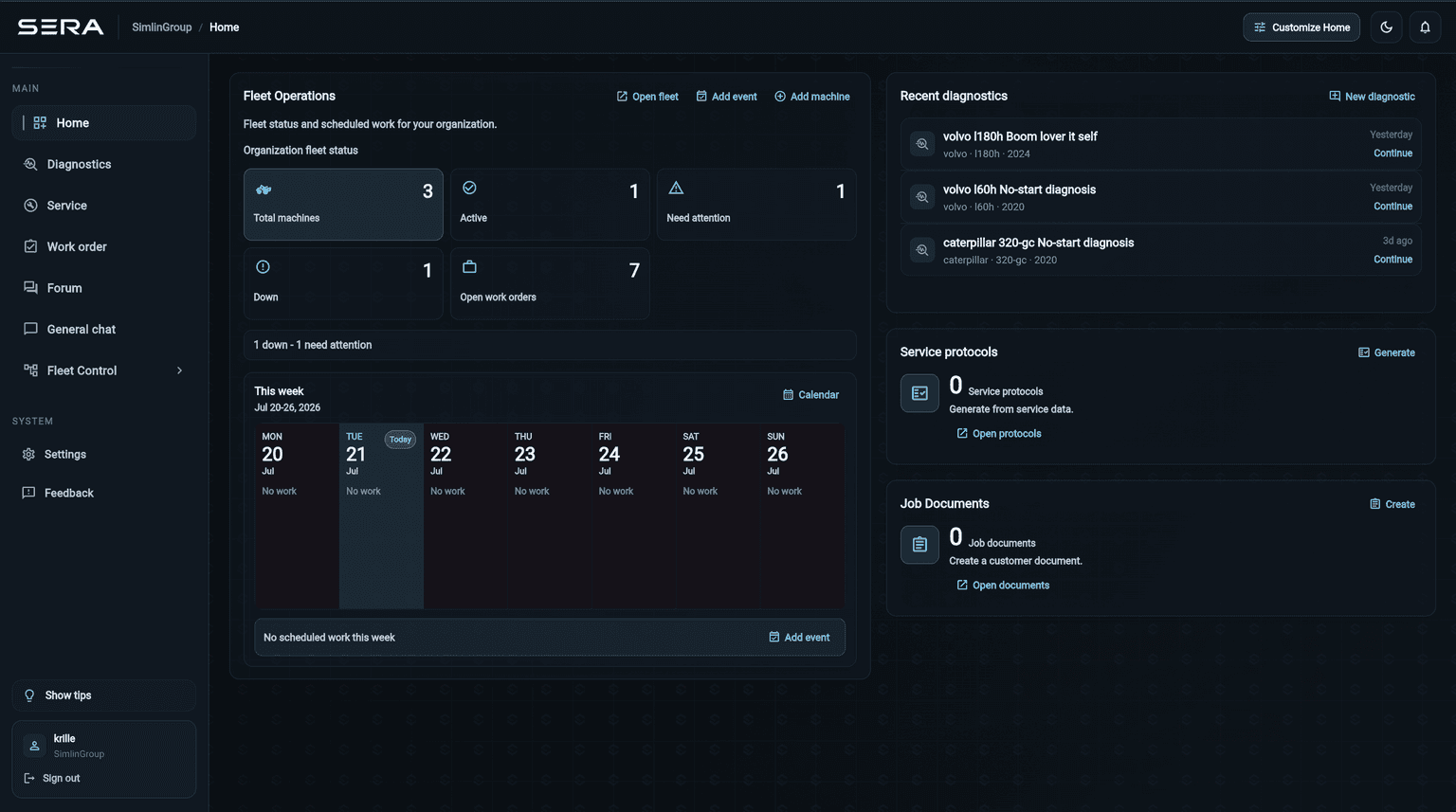
Connected operations
One connected workflow
From machine context to a permanent record.
- Machine
- Diagnose
- Service
- Execute
- Report
- History
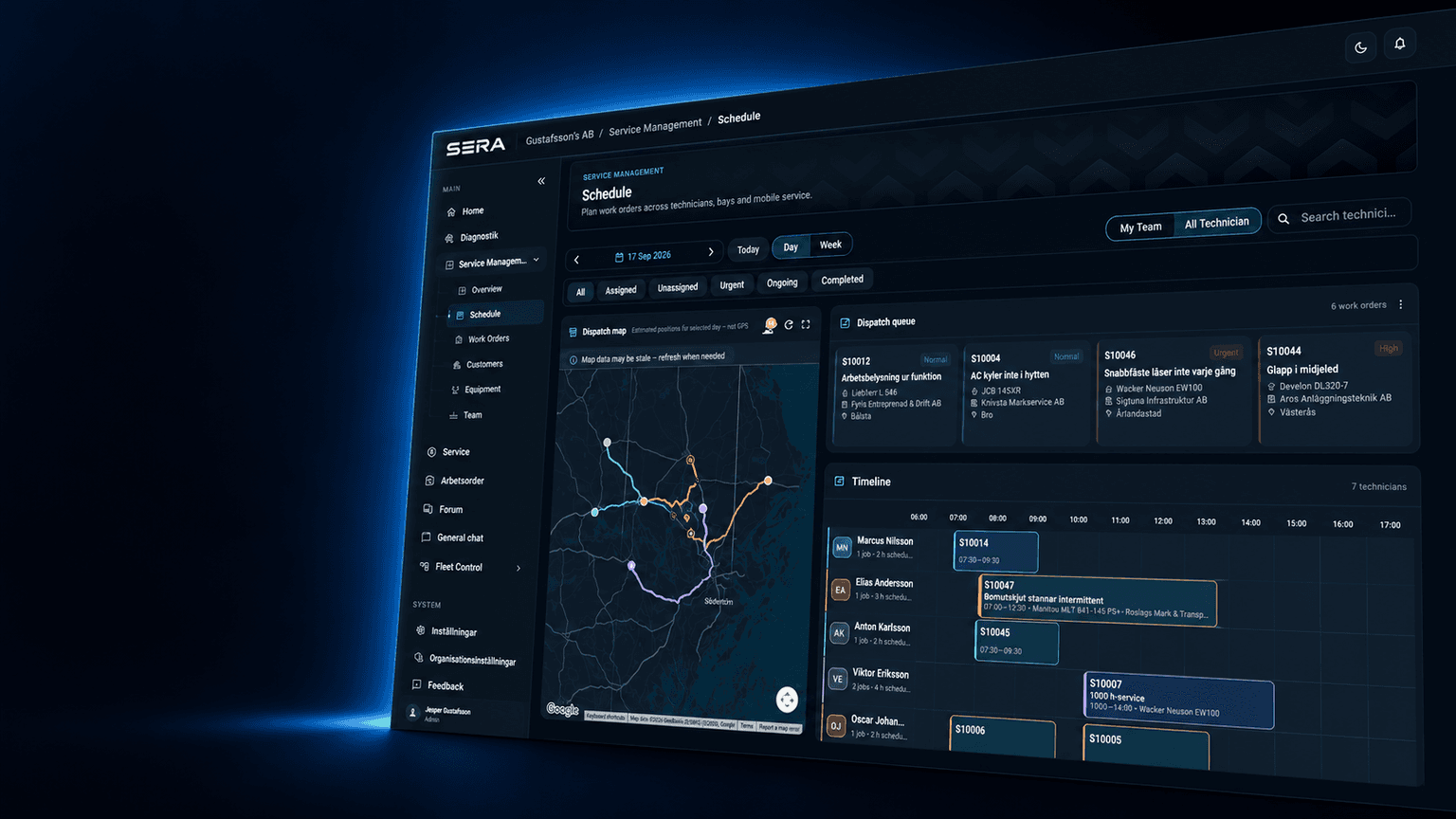
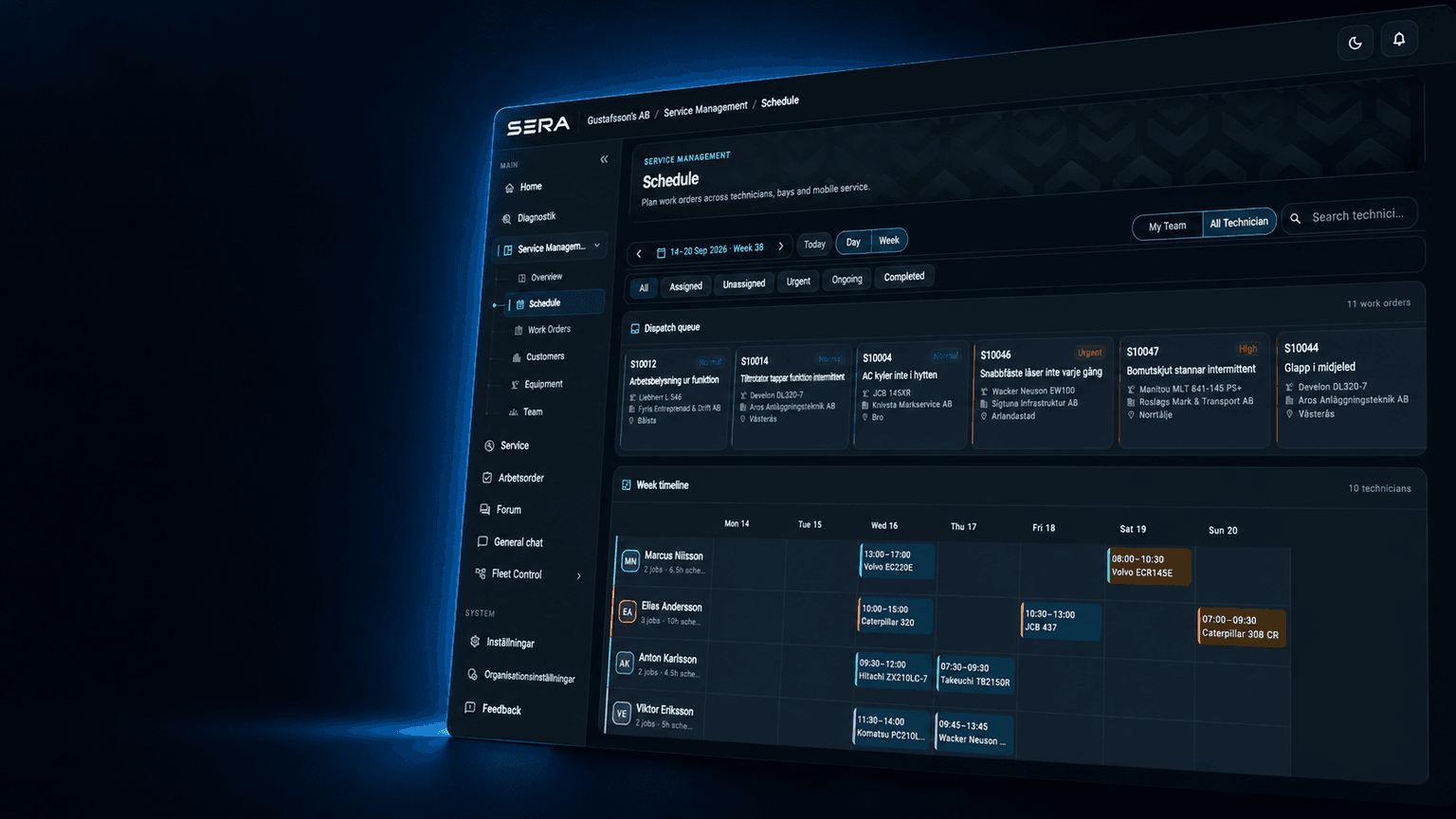
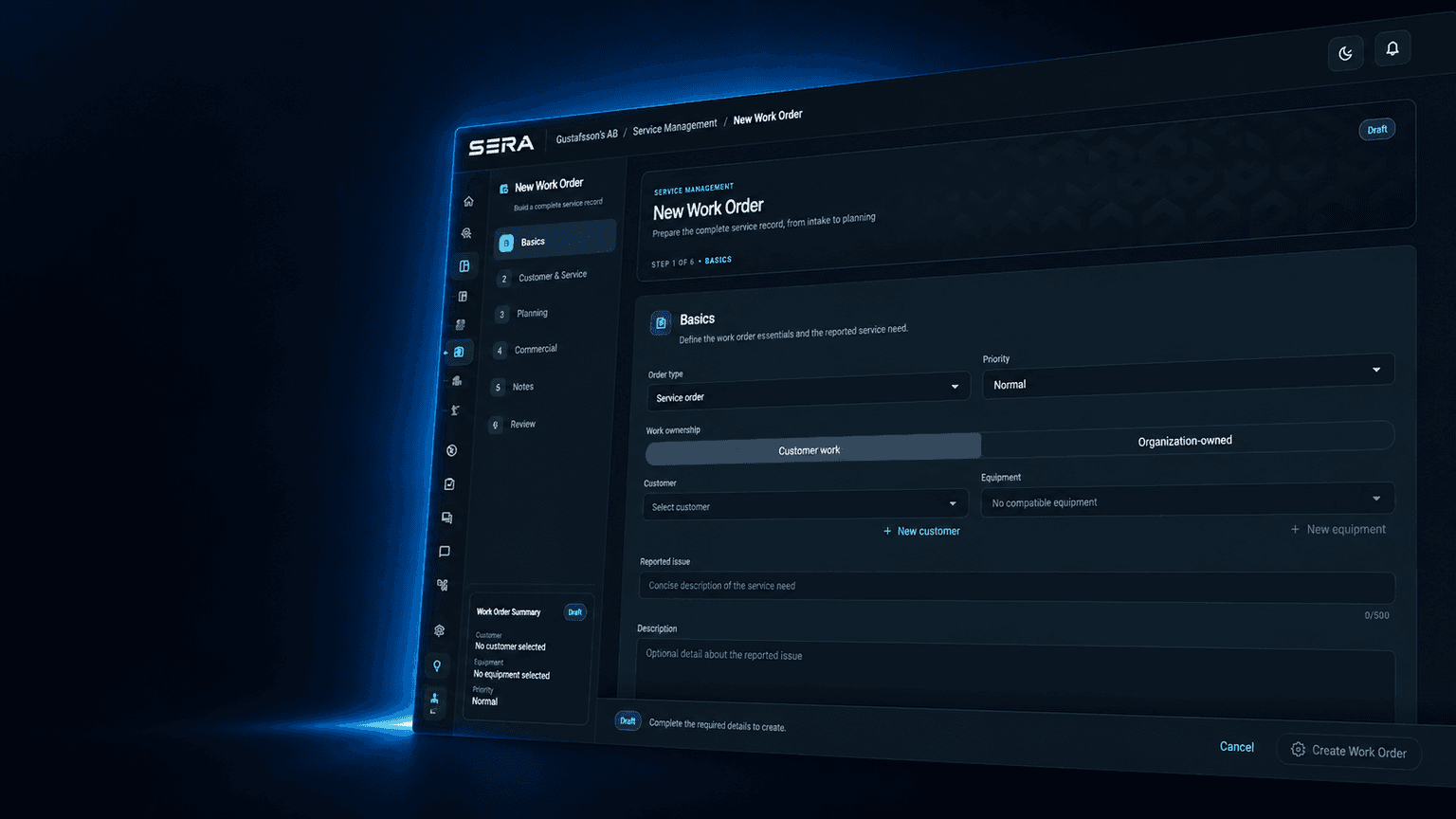
SERVICE MANAGEMENT
Run the service operation from one place.
DAY DISPATCH
Every route.
Every technician.
One plan.
See planned and unplanned work, understand each technician’s day, and coordinate the schedule with geography in context.
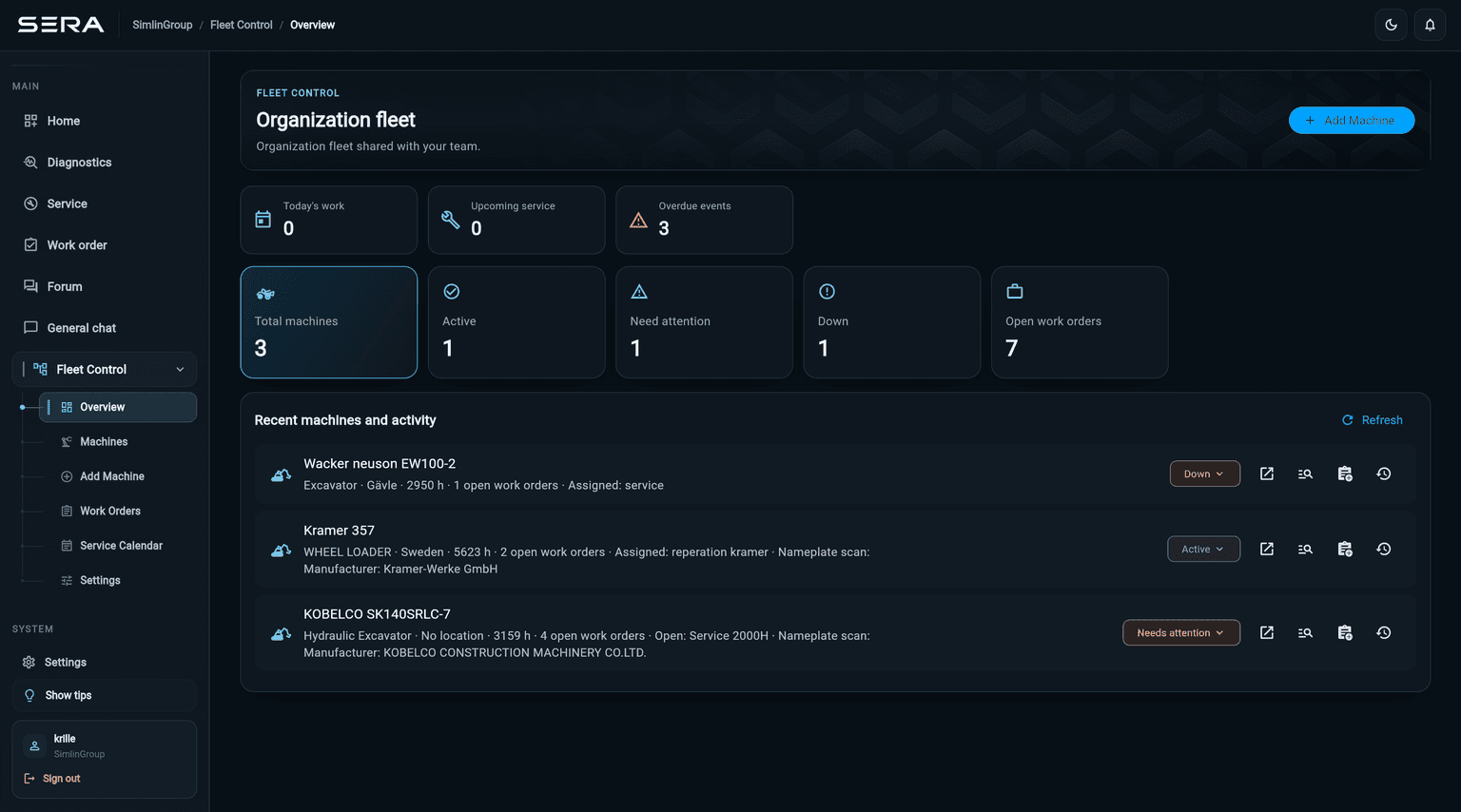
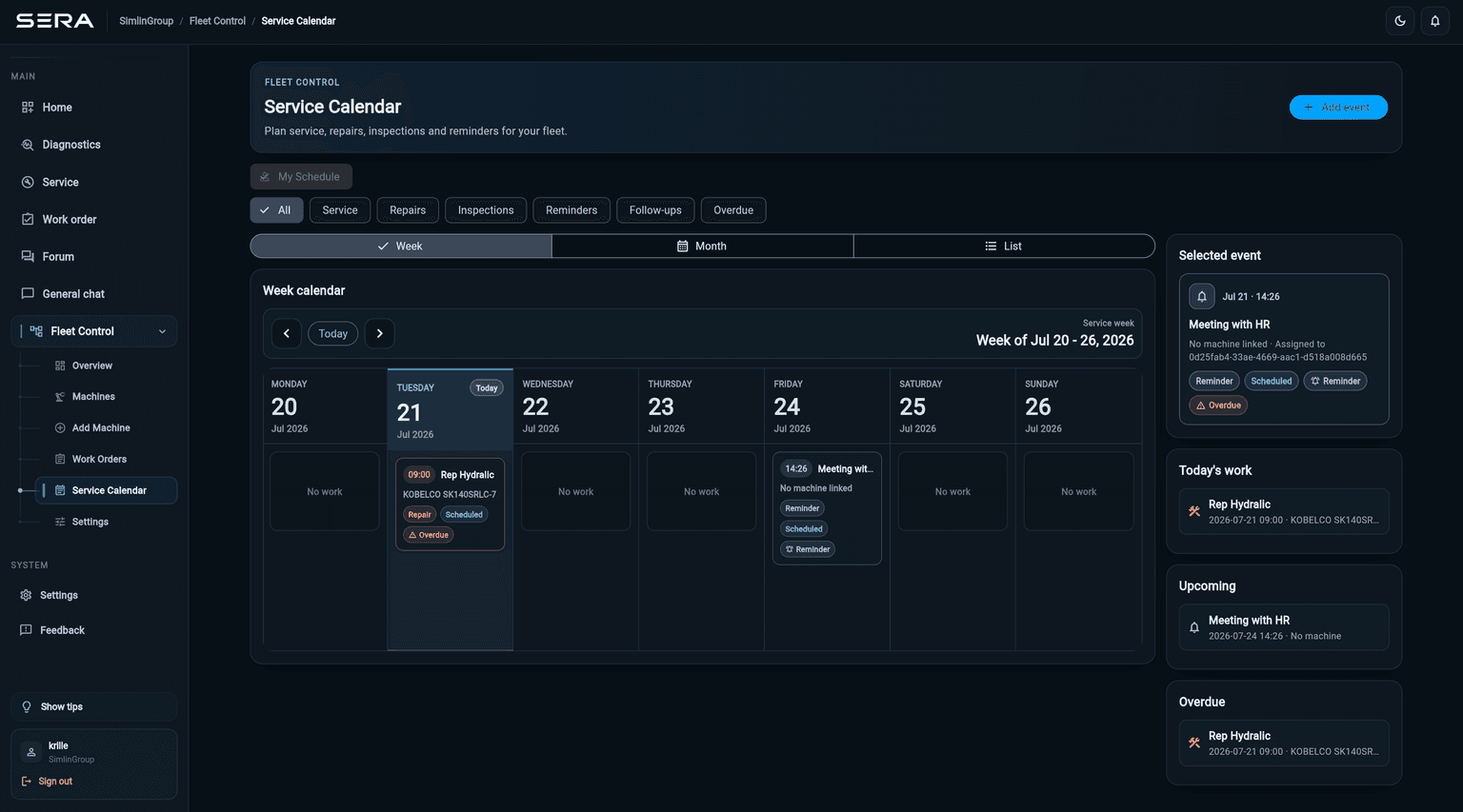
Fleet Control
Every job starts with the machine.
Fleet Control gives the workshop and field team the same starting point: what the machine is, what needs attention, what work is open, and what happened before.
- Machine status
- Open work
- Service scheduling
- Operational visibility
- Shared machine history
Diagnostics
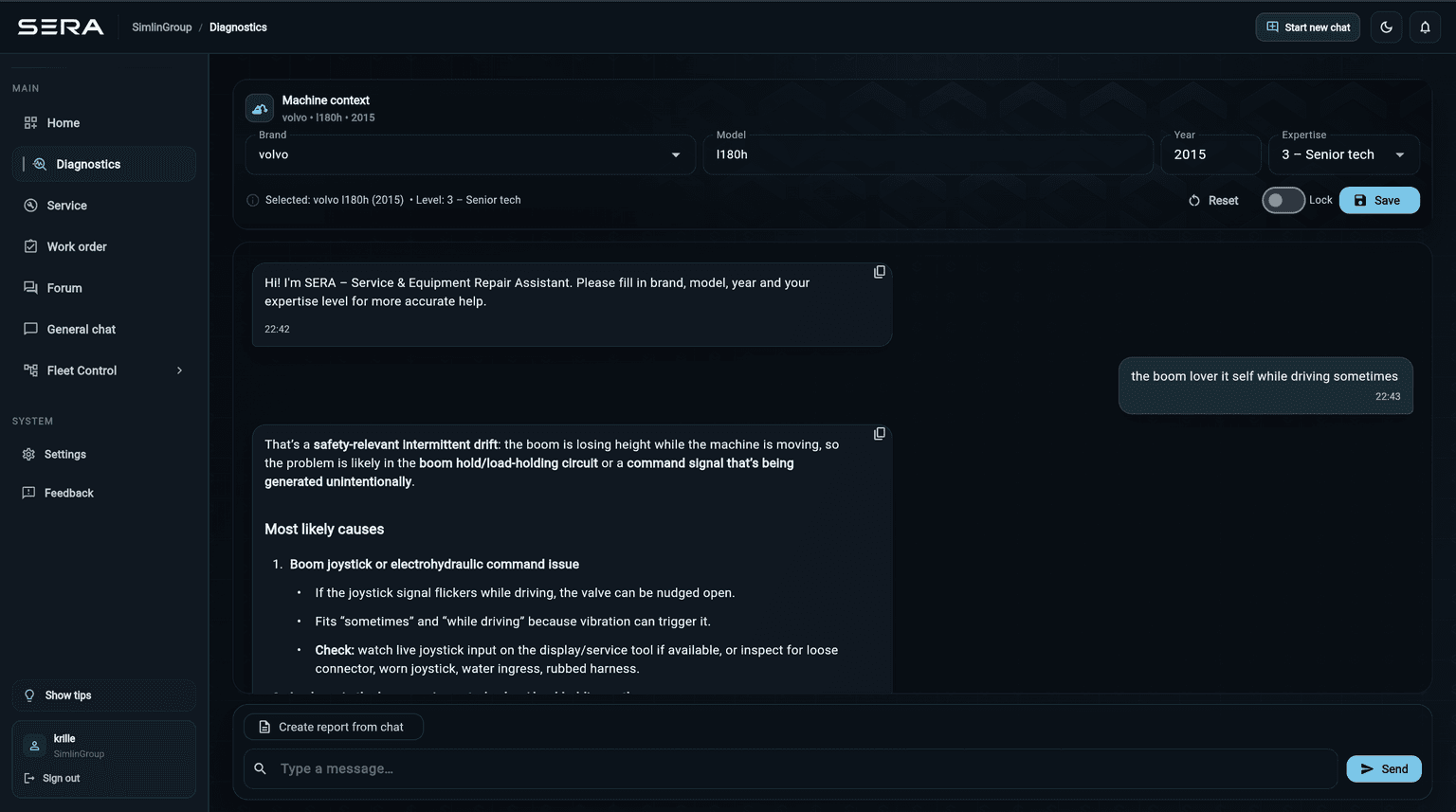
A fault code is evidence. Not the conclusion.
SERA keeps the evidence around a fault connected, so each next step can be reviewed against the machine, the symptoms, and the work already performed.
- Machine context
- Symptoms
- Technician input
- Diagnostic reasoning
- Next tests
- Previous work
Service
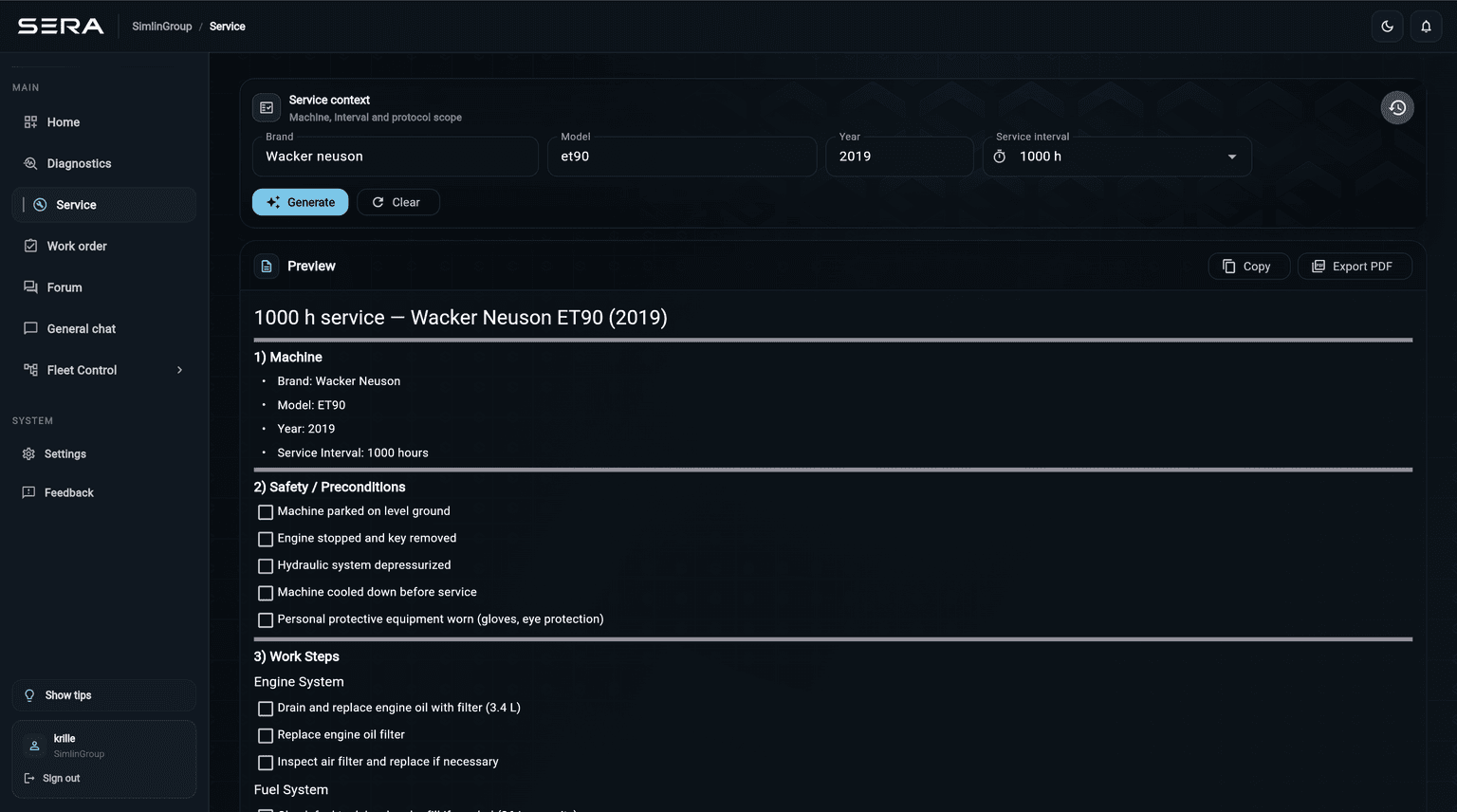
Turn service requirements into structured work.
Start with the machine and its service interval. Build a clear protocol, carry it through the work, and keep the completed result with the machine.
- Service planning
- Structured protocols
- Repeatable work
- Documentation
- Machine-specific records
Completed work
Machine service summary
- Work performed
- Reviewed and recorded
- Parts and materials
- Connected to the job
- Customer summary
- Ready for review
The technician reviews the draft before it becomes part of the machine record.
Job documents
Turn field work into customer-ready documents.
SERA turns reviewed work into service records that can support work orders, customer summaries, and billing-ready drafts without separating the result from the machine.
- Work orders
- Service reports
- Customer summaries
- Billing-ready drafts
Nothing is saved automatically. A user reviews the draft before it is applied to the work record.
Connected machine history
From work execution to one connected machine history.
Diagnostics, service work, and reviewed documentation remain part of one machine record.
Diagnostics
Evidence, symptoms, and tests stay with the machine.
Service
Machine-specific requirements become structured work.
Work order
The work, parts, and decisions stay connected while it is active.
Completed work
The reviewed result is documented while the details are fresh.
Machine history
The next technician can understand what happened and what changed.
Intelligence layer
The intelligence layer behind SERA.
SERA combines language-model reasoning with machine context, structured service data, diagnostic methodology, and the information already connected to the job.
It does not replace technical judgment. It helps service teams organize evidence, identify what is missing, and turn completed work into usable records.
- 1
Machine context
Brand, model, year, symptoms, history, and current work shape the response.
- 2
Grounded knowledge
SERA retrieves relevant technical and machine-specific information instead of relying only on general model knowledge.
- 3
Diagnostic discipline
Symptoms, fault codes, measurements, tests, and possible causes remain separate throughout the diagnostic process.
- 4
Human review
Diagnostics, voice reports, work orders, and customer documents remain under user control before anything is saved.
- 5
One connected record
What begins as machine context can continue through diagnostics, work execution, reporting, and machine history.
Built by a mechanic
Built around the pressure between the machine, the mechanic, and the office.
Service work rarely fails because people do not care. It breaks down when the right information is scattered, notes are postponed until the end of the day, and the next person cannot see what happened. SERA was started to close that gap.
01Machine information spread across portals, manuals and old notes.
02Field work completed before the documentation has even started.
03Useful repair knowledge trapped in one technician's memory.
SERA Pilot Program
Build the next version of heavy-equipment service software with us.
Use SERA in real operations, work directly with the team building it, and help shape the workflows that matter in your workshop or field-service organization.